











 Plena Pro
The business world is changing. What’s more, companies need to embrace digital HR more than ever to serve these changing needs, for both candidates and employees.
In this article, we will focus on the concept of digital HR, what it covers, and what its benefits are, within the framework of digital transformation in human resources. We will also offer some good advice on how HR departments can start their digitalization journey.
For people working in human resources management or considering a career in it, it is important to understand how significant the impact of digital HR on the field is and will continue to be.
A recent survey by Gartner‘ echoes this message, reporting that 58% of HR leaders say that driving business transformation (including digital transformation) is one of their top priorities. According to Deloitte‘, 56% of the companies surveyed are redesigning their HR programs to take advantage of digital and mobile tools, and 33% are using some form of artificial intelligence in their strategies.
These quotes show how important digital HR is and will continue to be in the field of human resources management. Digital HR is used not only to make HR processes more efficient, effective, and people-centered, but also to increase employee satisfaction and engagement.
The adoption of digital HR means that HR professionals will need new skills and competencies. Understanding the core components of digital HR, being able to use data analytics, and personalizing the employee experience are becoming increasingly important for HR professionals.
If you work in human resources management or are considering a career in it, it is important to follow the trends in digital HR and develop your skills in this area.
Digital HR 101: What Is It?
Digital HR refers to the transformation of human resources processes through the use of digital technologies. By automating many of the manual processes in its functions, HR can work more efficiently and effectively.
With Industry 4.0, big data, machine learning, artificial intelligence, and ChatGPT, where does Human Resources fit into all this?
We can say right at the center. Because all of this transformation began with big data: the billions of data points we record with smart devices whose use grows every day, the technological advances that make it possible to process them and generate insights, the robots and systems that thereby take over mechanical work, the changing and newly emerging industries, and right at the center of all of this, People.
Embracing digital transformation in HR also means that businesses can improve the employee experience while saving cost and time.
Digital Transformation in Human Resources: Why, When, How?
People are still the most valuable resource for a business; not robots, not systems, not smart learning machines. We are in an age of transformation, with systems created by people that, instead of replacing people, allow them to focus on more skilled work and make strategic moves.
For this reason, it is very important to define and implement a digitalization strategy and roadmap that includes the following steps:
- Which processes are to be brought to which level of digital maturity, and when, should be determined according to HR priorities; a company that still keeps its personnel records in Excel spreadsheets should not be aiming to deploy a chatbot application.
- How processes and approval mechanisms can best be moved to a system and a digital workflow should be worked out, and the owners responsible in these areas should be identified.
- Accordingly, suitable HR software should be selected and integrated. Systems that are suitable in terms of cost, speed, and security should be chosen; in this respect, the fastest and most cost-advantageous options are cloud-based systems hosted on secure servers. Moreover, SaaS systems, which let you try for 1 month and stop renting if you do not like them, allow you to see in practice whether the products fit your company’s processes, internal dynamics, and culture, and whether they include features that improve ease of use and user experience.
- Continuous training and communication should be used to ensure the change process is accepted within the company and to support adaptation to digitalization.
- Tracking, supervision, and continuous measurement of the project process should be ensured.
- Most importantly, it is essential to accept that this is a living process and to revise the digitalization roadmap when necessary according to the company’s changing strategy and priorities.
What Are the Most Compelling Benefits of Digital HR?
Digital HR makes life easier for human resources departments and has various benefits.
1. High productivity among HR staff
Digital solutions automate many manual tasks, from collecting candidate data to payroll management. This means HR staff can reduce the time they spend on manual work and save time, which can be spent on more value-added work.
2. Attracting and retaining talent
In today’s digital world, candidates expect a convenient and personalized recruitment process.
All companies, including your competitors, want to attract top talent. A digital and seamless recruitment process can provide a competitive advantage and help the best candidates choose you.
3. Compliance and security
HR departments are also subject to various regulations such as GDPR. And managing compliance tasks manually can be a very difficult job.
Cloud-based digital platforms securely store all employee information on servers within the EU in compliance with GDPR. They also help reduce the risks associated with keeping personal data on your computer’s hard drive.
4. Analytics and insights
Digital tools also mean better access to data. Thanks to built-in reporting and analytics, HR teams can better understand how employees are doing. This enables them to spot trends faster and act on this information to improve employee engagement and well-being.
At the end of the day, happy and engaged employees lead to increased productivity and better overall business performance.
Digital HR Application Areas and Examples
As a profession, HR involves a lot of paperwork and time-consuming tasks. This makes it an ideal candidate for digitalization.
Here are some examples of processes or functions within HR that you can digitalize:
1. Recruitment
It’s a competitive market out there. Some job postings receive hundreds of applications, and sorting through them manually can be time-consuming. For this reason, more and more companies are choosing to rely on HR automation tools such as Applicant Tracking Systems to help them discover the most qualified applicants more efficiently.
2. Remote work
The way people work is changing. As hybrid and remote work environments become more popular, the recruitment process needs to be adjusted. Using a digital tool can make the recruitment process smoother for both employer and employee, allowing them to adapt seamlessly to new ways of collaborating and even to consider the option of hiring a virtual assistant.
3. Employee self-service
Having a self-service portal where employees can find their payslips and related information or request a vacation day can significantly lighten HR departments’ daily workload. With such a system, employees are empowered to find the information they need on their own, so HR can focus on other tasks instead of answering the same questions every day.
4. Document management
HR departments have to create and manage a significant amount of paperwork, from employment contracts to IT policies and bonus agreements. Relying on a document management system that lets them send, sign, and store all employee documents digitally in one place is a game changer.
How to Get Started with Digital Human Resources Management
Changing the way you work is never easy. But to stay competitive, embracing digital HR is quickly becoming a necessity. So where do you start?
The process may look different from organization to organization. A great place to start is to identify which of your existing HR processes take up a significant amount of your time, require a lot of manual work, and are repetitive. Most likely, these processes can be digitalized and automated.
Next, define what you expect from a digital tool. Here you should also weigh impact and effort. What is the impact on the business of digitalizing the processes identified above? And what effort is required to do so in terms of time, cost, and other factors?
Once you have done this, you can start researching solutions. Since there are plenty of tools available today, you will certainly have a lot to choose from. Set up a few meetings, talk to some vendors, and see which solutions on the market best fit your needs.
As we said, the biggest shortcoming is the strategy, the roadmap, and the leaders and the right team to carry it out.
Defining a Digitalization Roadmap in Line with HR Strategies
Today digitalization is on everyone’s agenda, in HR managers’ KPIs and year-end goals, but we see that without a proper strategy and a well-planned roadmap, many investments unfortunately go to waste, and systems sit unused on the sidelines.
So how do we start this process? As we said, the biggest shortcoming is the strategy, the roadmap, and the leaders and the right team to carry it out.
Therefore, as with any project, it is very useful to follow these steps in a digitalization project:
- Identifying the Project Sponsor, Committee, and Project Stakeholders
Having a project sponsor from senior management, a committee reporting to that sponsor, and project stakeholders is critical for the project’s adoption, dissemination, tracking, supervision, and implementation within the company. Identifying a team with digital aptitude and literacy that can be both an advocate and an implementer of digitalization within the company is the most critical step.
- Mapping Business Processes
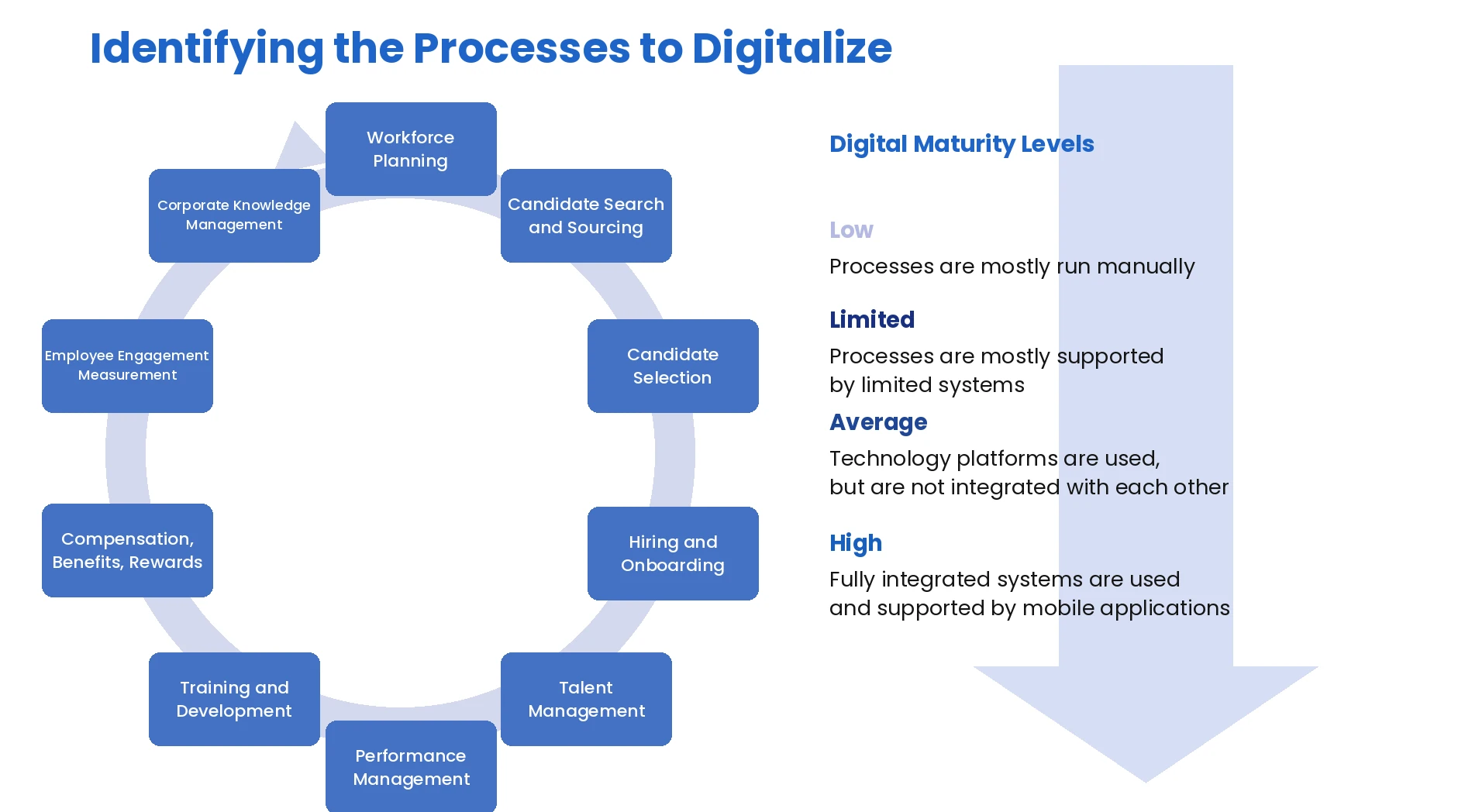
HR processes need to be mapped to cover the entire cycle, from workforce planning, sourcing and placement, recruitment, personnel files, and onboarding to performance management, training and development, internal communication, and data analytics.
- Identifying the Processes to Be Optimized
Within these processes, the steps that need operational efficiency and optimization must be identified, and their priorities must be set in terms of digital maturity levels and business processes.
A Fast, Effective, and Economical Local Solution in Digital HR: Plena İnsan
As mentioned above, a digital tool for sending, signing, and storing documents will go a long way toward making the HR team’s life easier.
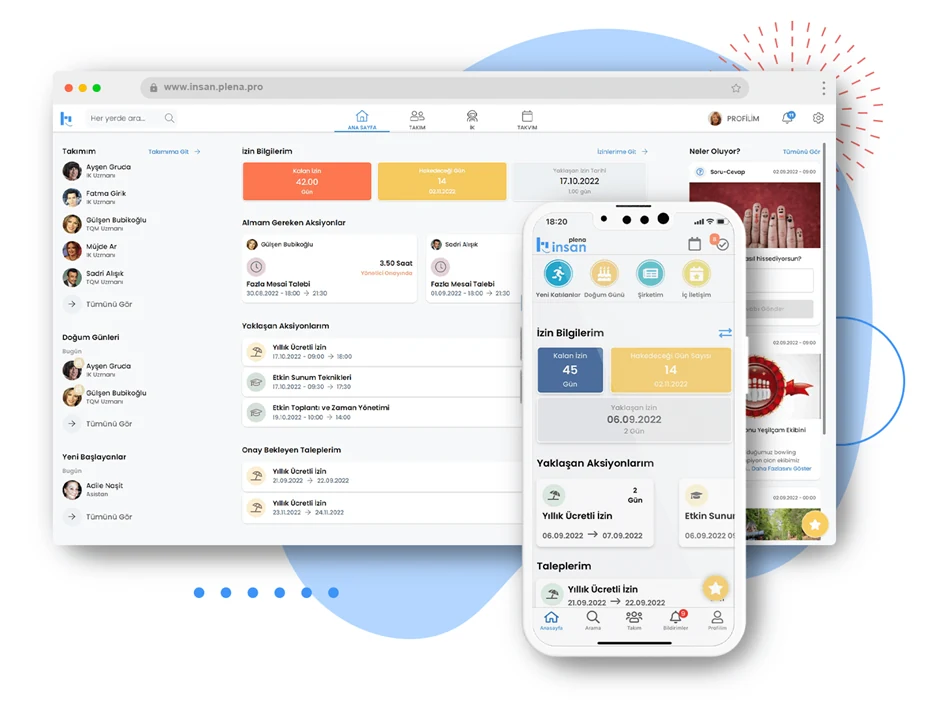
This is exactly where Plena İnsan helps HR departments:
- Your HR processes are managed securely in the cloud,
- Your human resources data is stored within Turkey’s borders,
- Instantly accessible from anywhere and on any device,
- Provides a quick solution with its simple design and ease of use,
- Offers a design that follows trends and puts user experience at the center,
- Changing legislation can be closely followed and integrated into the system,
- Can be used right away without needing IT support,
- You can try Plena İnsan for 15 days without paying anything!
Future Trends in Digital Human Resources
Digitalization is fundamentally changing human resources management, as it is in every area of the business world. Digital HR aims to make human resources processes and practices more efficient, effective, and people-centered by using digital technologies.
Digital HR is becoming increasingly important in the business world. Companies are adopting and using digital HR to stand out in the competition. The following trends will come to the fore in digital HR in the future:
Artificial intelligence and machine learning
Artificial intelligence and machine learning are among the most important trends in digital HR. These technologies will be used to automate HR processes and make them more effective. For example, artificial intelligence and machine learning can be used in processes such as recruitment, talent management, and performance evaluation.
Remote work adaptations
The pandemic has once again shown the importance of remote work. Digital HR will help remote workers be more productive and successful. For example, digital HR will make it easier for remote workers to communicate, collaborate, and access their personnel file information.
Personalized employee experiences
Digital HR will offer experiences tailored to employees’ individual needs and expectations. For example, digital HR can be used to identify employees’ training and development needs, monitor their performance, and support their career development.
In Closing
In an environment of such rapid developments, we are still quite behind in digitalization in Human Resources. The answers to why businesses of different sizes are still behind focus on the lack of digitalization roadmaps, strategies, and the leaders to drive them in that direction.
Of course, every company is different; every company has its own story, its own pace, and different strengths, weaknesses, and competencies. But the time has come for every company to determine where it stands in terms of digitalization and to identify realistically what steps it needs to take to move to the next stage.
Digital HR is the future of the business world. Companies that use digital HR can gain a competitive advantage over their rivals. The adoption rate of digital HR in the Turkish business world is still low. However, there have been significant developments in this area in recent years.
If you can approach this strategically, as the most important project of your company, and create a habitat where digitalization lives on continuously as a part of change, development, and growth, you will not merely survive as a business; you will be able to compete in both local and international markets. As Charles R. Darwin said, “It is not the strongest of the species that survives, nor the most intelligent… it is the one most adaptable to change.”